

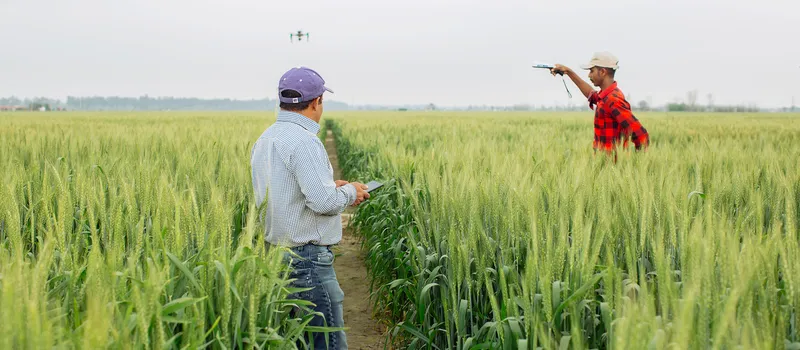
In an era defined by rapid technological advancements, the agriculture industry is undergoing a digital transformation that promises to revolutionize the way farmers make decisions and manage their operations. Digital agriculture tools leverage cutting-edge technologies such as artificial intelligence (AI), Internet of Things (IoT), and big data analytics to provide farmers with real-time insights, predictive analytics, and precision farming techniques. In this blog post, we will explore how digital agriculture tools can improve decision-making and farm management, empowering farmers to enhance productivity, optimize resource use, and achieve sustainable agricultural practices.
Precision Farming:
Digital agriculture tools enable precision farming techniques that allow farmers to optimize inputs such as water, fertilizers, and pesticides, based on site-specific conditions and crop requirements. Through the use of sensors, drones, and satellite imagery, farmers can gather data on soil moisture levels, nutrient content, and crop health, enabling targeted interventions and precise application of inputs. Precision farming minimizes input wastage, reduces environmental impact, and maximizes crop yields, ultimately improving farm profitability and sustainability.
Data-Driven Decision-Making:
Digital agriculture tools provide farmers with access to vast amounts of data on weather patterns, soil conditions, crop performance, and market trends. By harnessing the power of big data analytics and machine learning algorithms, farmers can analyze this data to make informed decisions about planting schedules, irrigation timing, crop rotations, and pest management strategies. Data-driven decision-making enables farmers to anticipate risks, identify opportunities, and adapt their farming practices in real-time, improving overall farm performance and resilience.
Predictive Analytics:
One of the key benefits of digital agriculture tools is their ability to generate predictive analytics that forecast future outcomes and trends based on historical data and machine learning algorithms. Predictive analytics can help farmers anticipate potential yield fluctuations, pest outbreaks, and market fluctuations, allowing them to proactively mitigate risks and capitalize on opportunities. By leveraging predictive analytics, farmers can optimize resource allocation, streamline operations, and improve overall farm profitability and sustainability.
Remote Monitoring and Management:
Digital agriculture tools enable remote monitoring and management of farm operations. By allowing farmers to oversee their fields and livestock from anywhere, at any time. IoT-enabled sensors and connected devices provide real-time data on soil moisture, temperature, humidity, and livestock health. By enabling farmers to detect anomalies, identify issues, and take timely corrective actions. Remote monitoring and management enhance operational efficiency, reduce labor costs. And improve farm productivity, particularly for large-scale and geographically dispersed operations.
Farm Automation:
Advancements in digital agriculture have led to the development of farm automation technologies. That automate routine tasks such as planting, irrigation, and harvesting. Automated machinery, drones, and robotic systems can perform these tasks with precision and efficiency. By reducing labor requirements and improving overall farm productivity. Farm automation also minimizes human error, increases operational safety. And frees up farmers’ time to focus on higher-value tasks such as strategic planning and decision-making.
Connectivity and Collaboration:
Digital agriculture tools facilitate connectivity and collaboration among farmers. Agronomists, researchers, and industry stakeholders, creating a networked ecosystem where knowledge and best practices are shared. Online platforms, mobile apps, and overall social media channels enable farmers to access information. They can exchange ideas, and collaborate on research projects and agronomic trials. Connectivity and collaboration foster innovation, accelerate technology adoption, and empower farmers to collectively address shared challenges and opportunities in agriculture.
Conclusion:
In conclusion, digital agriculture tools hold immense potential to transform the way farmers make decisions and manage their operations. Meanwhile driving productivity, efficiency, and sustainability in agriculture. By moreover leveraging precision farming techniques, data-driven decision-making, predictive analytics, remote monitoring and management, farm automation, and connectivity and collaboration. Farmers can obviously optimize resource use, minimize environmental impact, and improve farm profitability and resilience. Embracing digital agriculture is essential for unlocking the full potential of modern farming practices. And addressing the evolving challenges facing the agriculture industry in the 21st century.